Hidden Stories Behind Texas’s Most Historic Town Squares
Texas's historic town squares can hold complicated stories beneath their picturesque facades. You'll find accounts of frontier justice, courthouse architectural oddities like hidden staircases, and layered cultural influences from Spanish, German, and Anglo-American settlers.
In Goliad, where a Texas Revolution–era declaration was signed in late 1835, both democratic ideals and community conflict shaped the landscape. These seemingly charming civic centers reveal complex layers of cultural tension, community resilience, and regional identity for those who look closer.
The Hanging Trees: Dark Tales of Frontier Justice in Texas Squares
While many visitors admire the charm of Texas's historic town squares, a darker history can loom within these spaces. You're walking past living monuments to frontier-era justice—the trees and corners of squares that were sometimes associated with public punishment and intimidation.
These places weren't merely execution sites but powerful symbols of social control. In different communities, public punishment—whether sanctioned by courts or driven by mob violence—could reinforce local power structures and intimidate entire neighborhoods, particularly in eras when legal protections were unevenly applied.
What appears as just another oak or elm might have witnessed violence, sometimes recorded, sometimes only preserved through oral history and local memory. The social implications extended beyond punishment—they could enforce hierarchies and silence whole communities in ways that still echo today.
Whispers From the Past: Courthouse Secrets and Architectural Symbolism
Beyond those grim stories stands another monument to Texas history—the courthouses that anchor many town squares. These architectural landmarks reflect Texas's civic identity through styles like Beaux Arts, Romanesque Revival, and Victorian-era design choices. You'll also find practical quirks—tight staircases, odd corridors, and "why is this here?" doors—built for everything from ventilation and circulation to simple design improvisation.
These courthouses aren't just buildings—they're carefully crafted symbols of resilience and civic pride, often serving as the heart of small communities both physically and culturally. When exploring, notice classical columns and domes signaling permanence and democratic ideals, clock towers reinforcing the square as a time-and-order centerpiece, and multiple entrances that visually communicate public access and civic function.
Beyond the Battle: How Goliad's Square Shaped Texas Independence
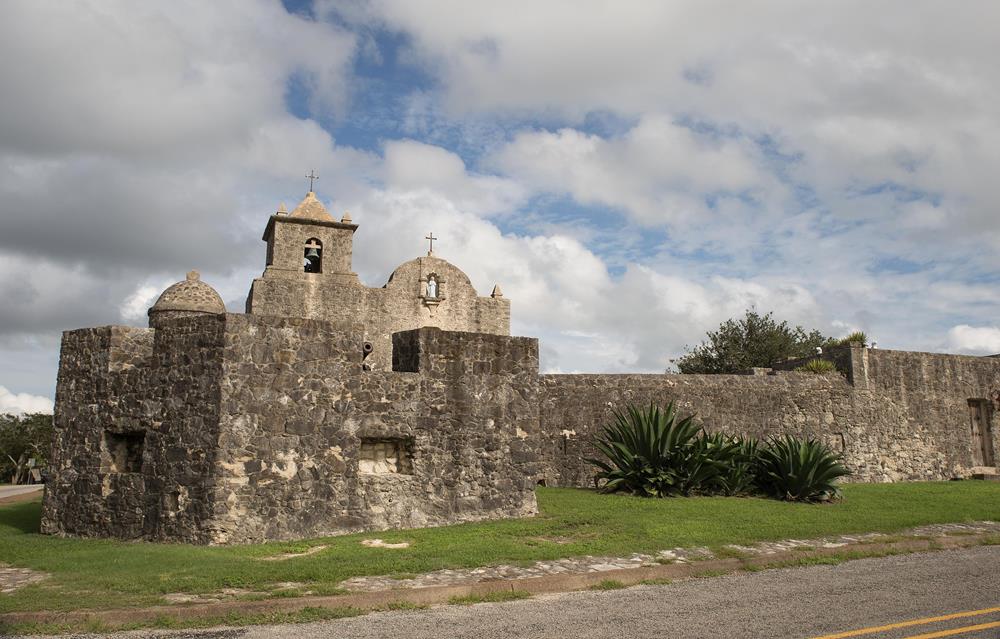
A pivotal chapter of Texas Revolution history is tied to Goliad, where a declaration associated with the independence movement was signed in December 1835. Local history commonly places that event at the chapel at Presidio La Bahía (often called "the Alamo of the Prairie"), underscoring how religious, civic, and military spaces overlapped in early Texas communities.
Goliad's public memory also holds difficult contrasts—civic governance and community conflict existing side by side, especially in the decades after independence. Instead of reducing the square to a single heroic storyline, it's more accurate to see it as a place where competing priorities—law, identity, politics, and survival—played out in public view.
Nearby historic sites and markers also highlight that Goliad's story bridges Mexican and Texan heritage, reminding visitors that borderland history rarely fits into simple categories.
Cultural Crossroads: The German, Spanish, and Anglo Influences on Town Square Design
Texas town squares can function like living museums where Spanish, German, and Anglo-American design philosophies converge into distinct civic identities. When you explore these squares, you'll notice how spatial arrangements reflect different planning traditions: Spanish plazas emphasized open public space with churches and civic buildings nearby, German-influenced towns often elevated civic visibility and community gathering, while Anglo-American layouts frequently kept the courthouse central while adapting to commerce and later transportation corridors.
Spanish planning often prioritized a central plaza as a shared civic stage. German settlers frequently emphasized communal use and public visibility. Anglo-American courthouse-square traditions typically balanced civic function with surrounding commerce.
The Shelbyville Plan is widely cited as one of the most common courthouse-square layouts in Texas. Hybrid layouts emerged where cultures intersected, creating unique regional identities and a built environment shaped by local needs as much as heritage.
From Market Day to Festival: The Evolution of Square Gatherings Through Time
While cultural influences shaped the physical design of town squares, the activities within these spaces underwent their own transformation over time. Early courthouse squares often buzzed with market days, where farmers and merchants traded goods in a central commercial hub.
As towns grew, these spaces evolved beyond commerce to civic functions—public speeches, legal notices, and community gatherings that strengthened local identity. Over time, preservation and reinvention also became part of the story, as many communities worked to keep their squares active with seasonal events, festivals, and heritage programming while still accommodating growth and modern life.
Adaptive Survival: How Historic Buildings Found New Purpose Around Texas Squares
Historic buildings around town squares have often reinvented themselves through adaptive reuse while preserving their architectural bones. You'll find former storefronts transformed into cafés, galleries, and small-business clusters where original brick and wood details meet contemporary interiors.
These reuse strategies don't just preserve cultural heritage—they can drive economic revitalization by bringing daily foot traffic back into historic cores. Preservation guidelines and local leadership help safeguard authenticity despite modernization.
Even when rehabilitation costs more than new construction up front, communities often pursue it because the long-term payoff includes economic activity, identity, and continuity—keeping the square meaningful rather than museum-like.
Unsung Heroes: The Community Preservationists Saving Texas Square Heritage
Behind every restored courthouse and revitalized town square, you'll find people whose names rarely appear on markers. These preservation champions form partnerships that keep Texas heritage spaces alive, often working through grant programs and local fundraising.
Many courthouse restorations connect to the Texas Historic Courthouse Preservation Program (THCPP), which supports preservation planning and construction funding for eligible historic courthouses.
Local groups also collect oral histories and community memories to preserve what buildings alone can't hold: the lived experience of the square across generations. Their work doesn't just protect architecture—it maintains the cultural narratives that make these places meaningful gathering spaces.